

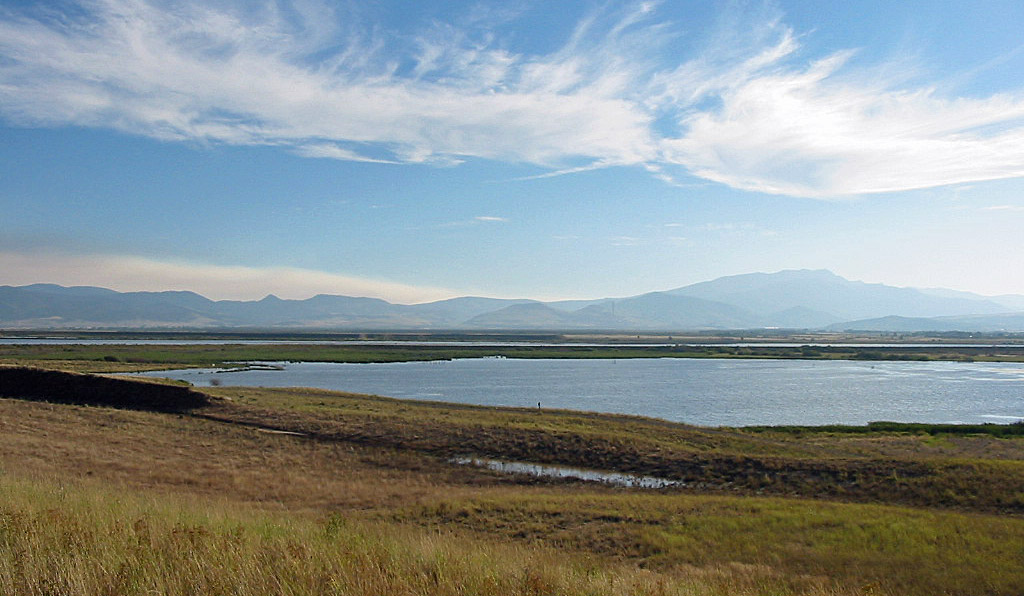
Normally, one would not think that the nations largest Superfund site would harbor any fish at all. Let alone monster trout. Yet, that is the case at the Anaconda Settling Ponds located north of Anaconda and fifteen miles west of Butte. These settling ponds, designed to absorb the toxic metals waste from century-old mining activities done upstream, harbor huge trout.
The Anaconda Settling Ponds are part of the Warm Springs Wildlife Management Area, managed by the State of Montana. As such, it is managed for fisheries and wildlife habitat. Besides holding some huge trout in these ponds, excellent waterfowl populations are also present.
History of the Anaconda Settling Ponds
A short history of the Anaconda Settling Ponds is probably in order. For more than a hundred years, extensive copper mining activities occurred upstream from these ponds at the Butte Copper Mines. Toxic metals, such as zinc, copper and arsenic, from these mining activities flowed into a prime tributary of the Clark Fork, Silver Bow Creek. These toxic metals then washed down the entire length of the Clark Fork, causing tremendous environmental damage, which the Clark Fork still suffers from on occasion today.
Involving a tremendous and costly cleanup effort, the Anaconda Settling Ponds were developed to catch and treat all water coming down from Silver Bow Creek. And the success has been amazing. Silver Bow Creek, once it leaves the settling ponds, has virtually no traces of toxic metals or wastes. Additionally, other cleanup efforts around other tributaries of the Clark Fork, such as Willow Creek and Warm Springs Creek, have also resulted in nearly pure water.
Initially, the area around the settling ponds was nothing but a mine tailing wasteland, barren of most everything. Through the planting of trees, bushes, cattails and other aquatic vegetation, a surprisingly healthy and beautiful wetland has emerged. While it hardly compares to a scenic and natural spot found in the mountains somewhere, most people visiting the Settling Ponds are pleasantly surprised how far the region has come from its barren past.
The settling ponds themselves were created to hold the mining wastes, acting as a dam so that the metals didn’t end up in the Clark Fork. The tailings are then covered over with lime to prevent them from leeching. A series of ponds provides treatment to the water, with the water being further cleansed as it is transferred from pond to pond.
Fishing the Settling Ponds
With all this cleanup and surprisingly pure water, the next step was to start stocking trout and to let them grow. Surrounded by the budding wildlife area and wetland, the rainbow trout—and now cutthroat trout—have grown nicely.
The result of all of this is that some of the ponds hold lots of trout, some of them huge. In particular, the “Hog Hole and Wildlife Ponds” are known statewide as a place to catch a huge rainbow trout. All of the ponds have strict regulations that differ markedly from statewide fishing regulations. A summary of these regulations is as follows:
- All ponds and canals open to fishing from August 15 – September 30. Catch and release with artificial lures only. No motorized boats allowed.
- Hog Hole Pond is open to fishing from May 25 through September 30. Catch and release only.
- Pond Three is open from May 25 through September 30. No motorized boats. Catch and release only.
- Willow Creek, Clarks Fork, Warm Springs Creek are open to fishing the entire year. No float fishing. Catch and release only.
Note – Fishing regulations change year to year. Before fishing any of these ponds, be sure to look through the latest Montana FWP regulations and/or stop by the office at the Wildlife Management Area.
With these restrictions in mind and since motorboats aren’t allowed, anglers will need to use a boat that’s easy to paddle. By far the best boat for fishing the ponds are inflatable kayaks. These boats are easy to paddle, track straight and work well in moderate winds. Pontoon boats are also a good choice. Float Tubes can work, but some ponds are rather sizeable which limits how much water an angler using a float tube can cover.
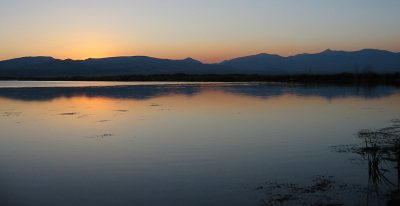
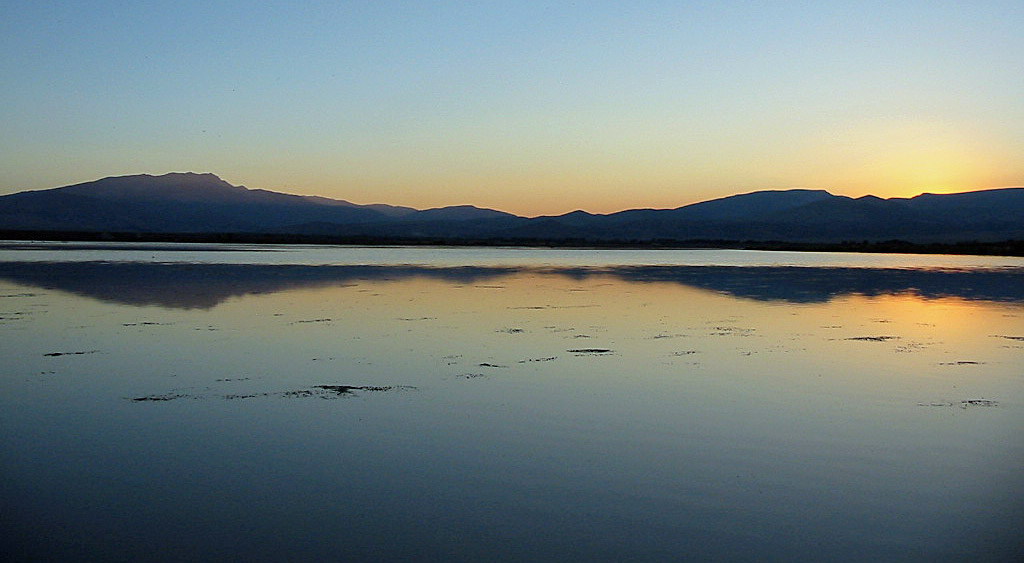
Anaconda Settling Ponds at Sunset.
Additionally, the “Hog Hole Pond” is small enough to be fly fished well from shore. Pond 3, which is significantly larger than the “Hog Hole”, is best fished by a canoe, pontoon boat or inflatable kayak. It should be noted that the winds are often strong in this area, presenting paddling and casting challenges, particularly out on Pond 3.
Fly fishing in the settling ponds, particularly the “Hog Hole Pond” and Pond 3, is no simple task. It requires patience—these large trout are surrounded by an endless buffet of natural insects. Getting them to take your fly is a huge challenge that also requires some luck. One approach is to look for actively feeding fish, then tossing the fly towards the fish. Stealth is key. Loud splashing in the water is not likely to get you very far.
Popular flies used on the “Hog Hole Pond” and Pond 3 include Wolly Buggers and various leech imitations, sized 2-8. Caddis imitations such as the Elk Hair Caddis and the X-Caddis in sizes 14-16 also work well. Finally, Damselfly imitations such as the Swimming Damsel also work well. Also, don’t be afraid to switch over to a sinking or sink tip line, fishing large streamers down in the depths, especially on Pond 3—which can be quite deep.
Access to these ponds is easy and excellent. Roads essentially ring the whole complex. Trails then take off from the roads, allowing for an easy walk to the “Hog Hole Pond”. Pond 3 can be driven to by going to the picnic area that is located on the north side of the pond. A boat ramp even exists. Just remember—no motors allowed.
Overall, for any angler in search of truly large trout (trout here average 2.5 pounds but frequently exceed 10 pounds), the Anaconda Settling Ponds make for a worthwhile diversion. While the scenery is less than spectacular and the nearby Interstate can makes things noisy, the large trout can make any Montana fly fishing trip a very memorable one indeed.
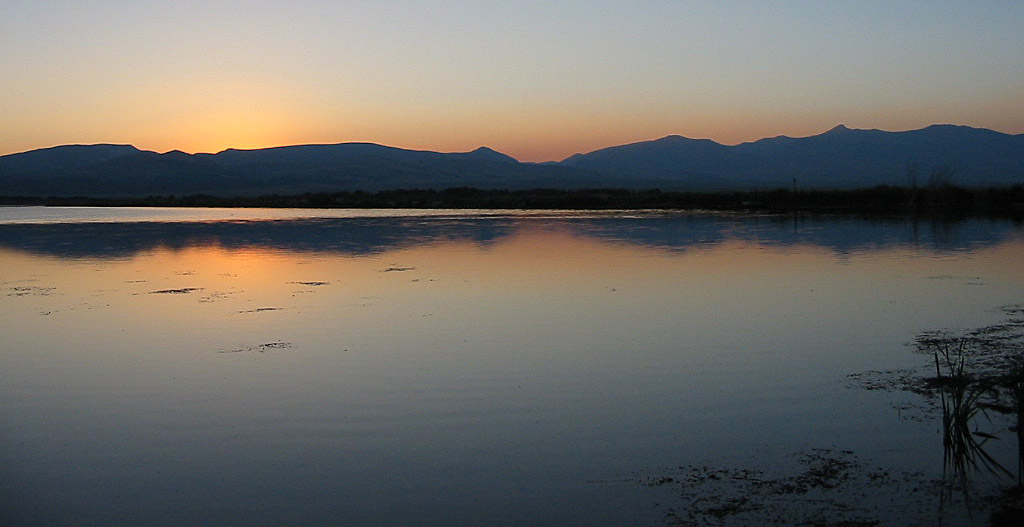
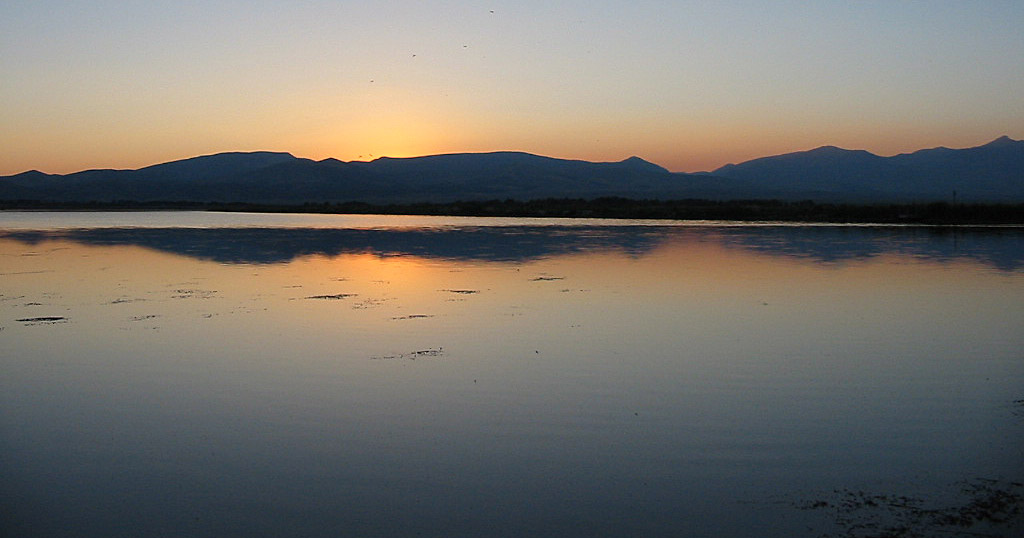
More Photographs of the Settling Ponds
Related Articles on Big Sky Fishing.Com
- Fishing & Floating the Clark Fork in Montana
- Clark Fork Photographs
- Butte, Montana – Town info and photos