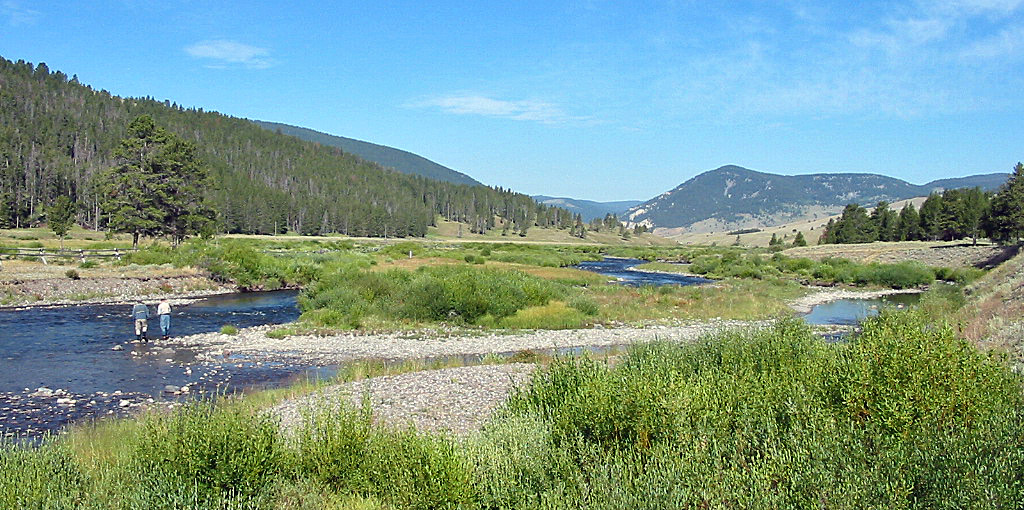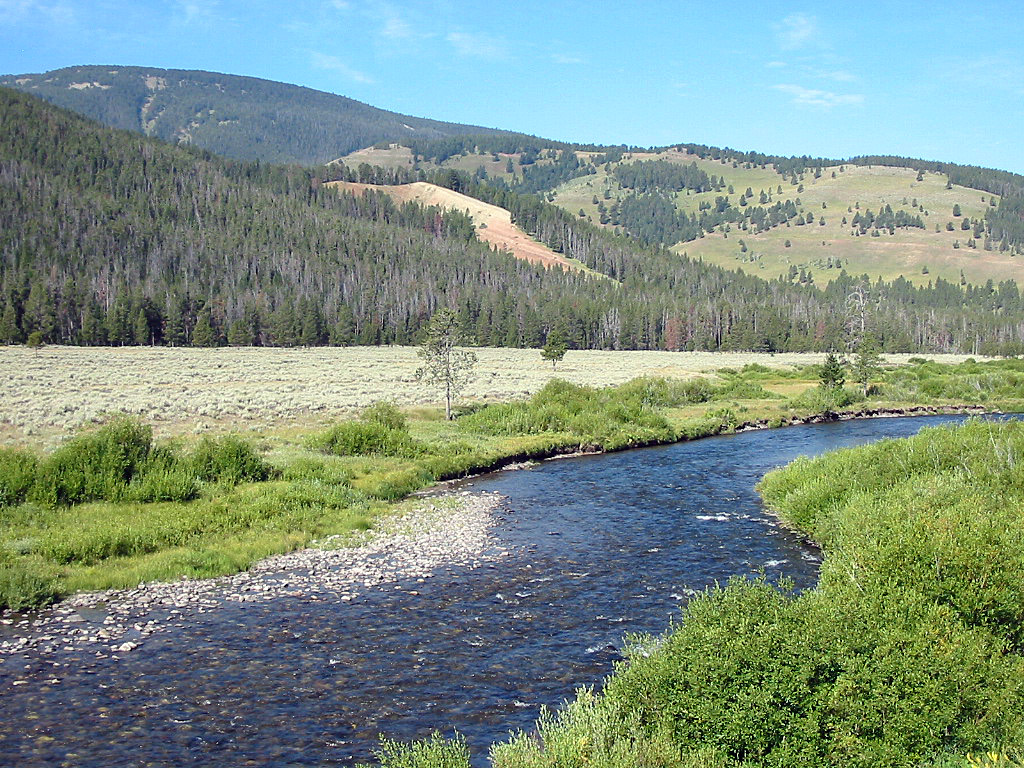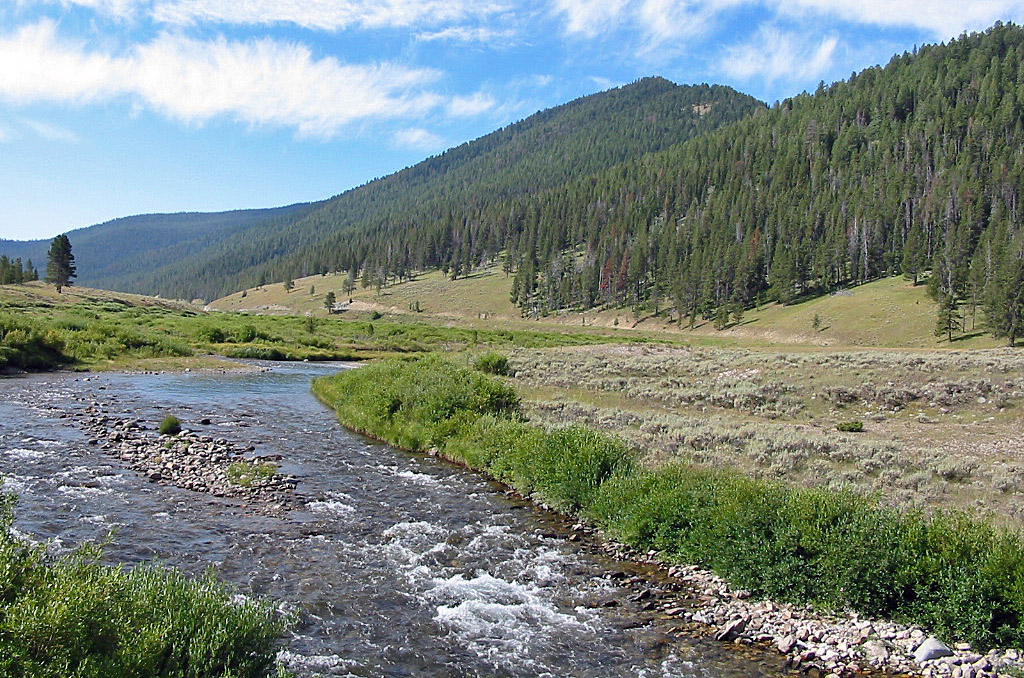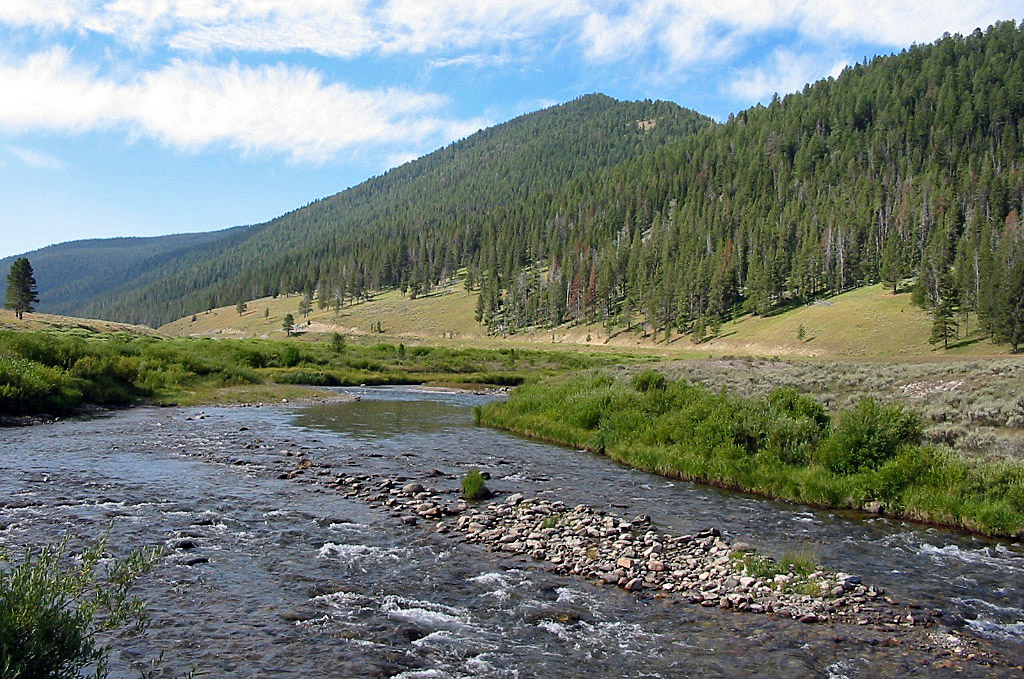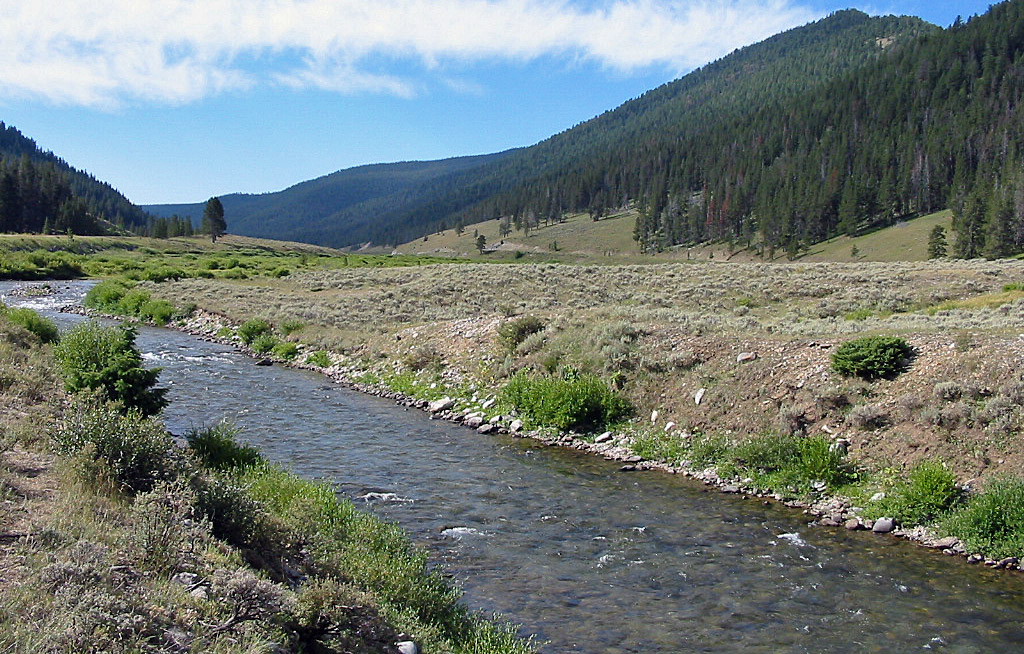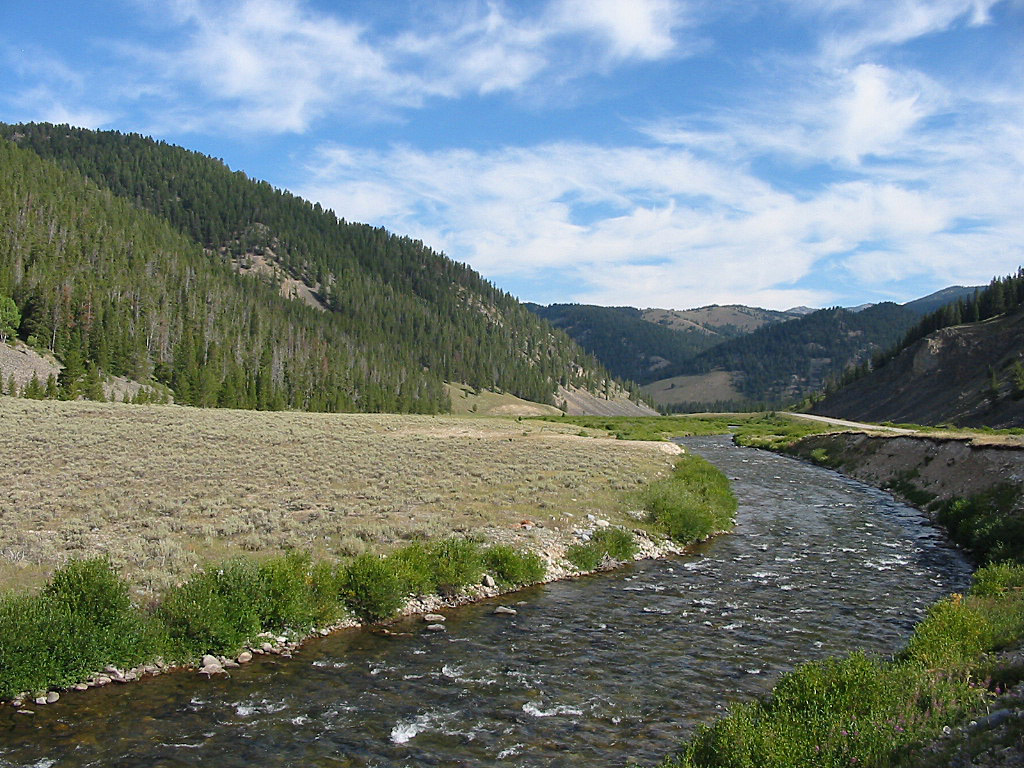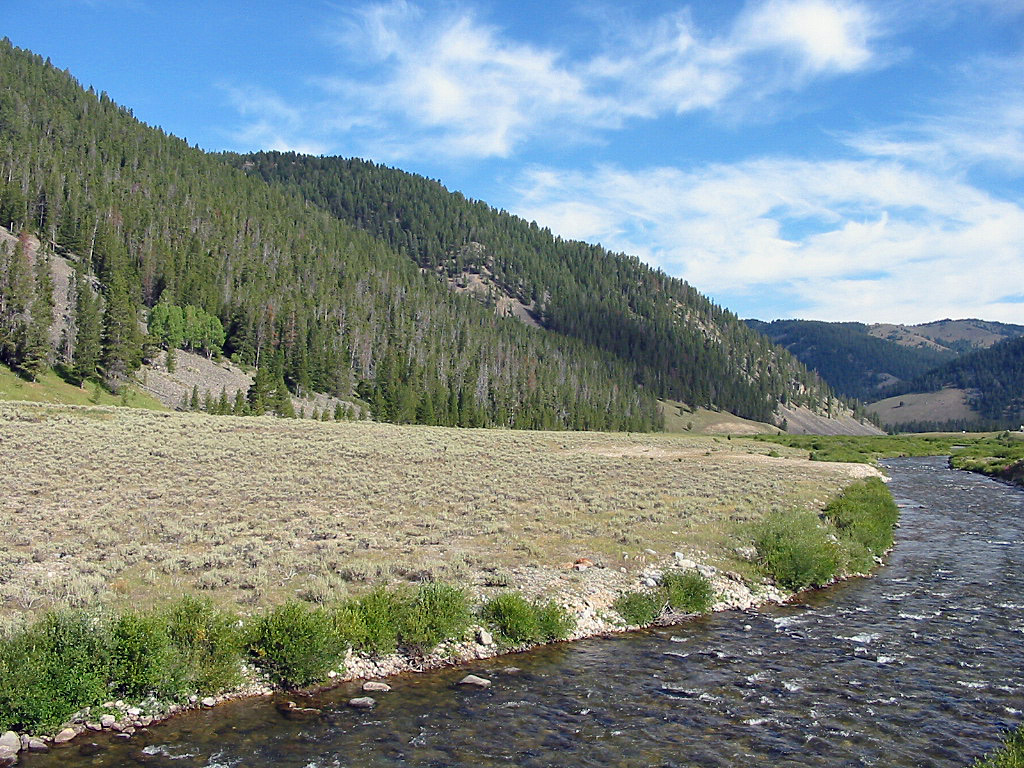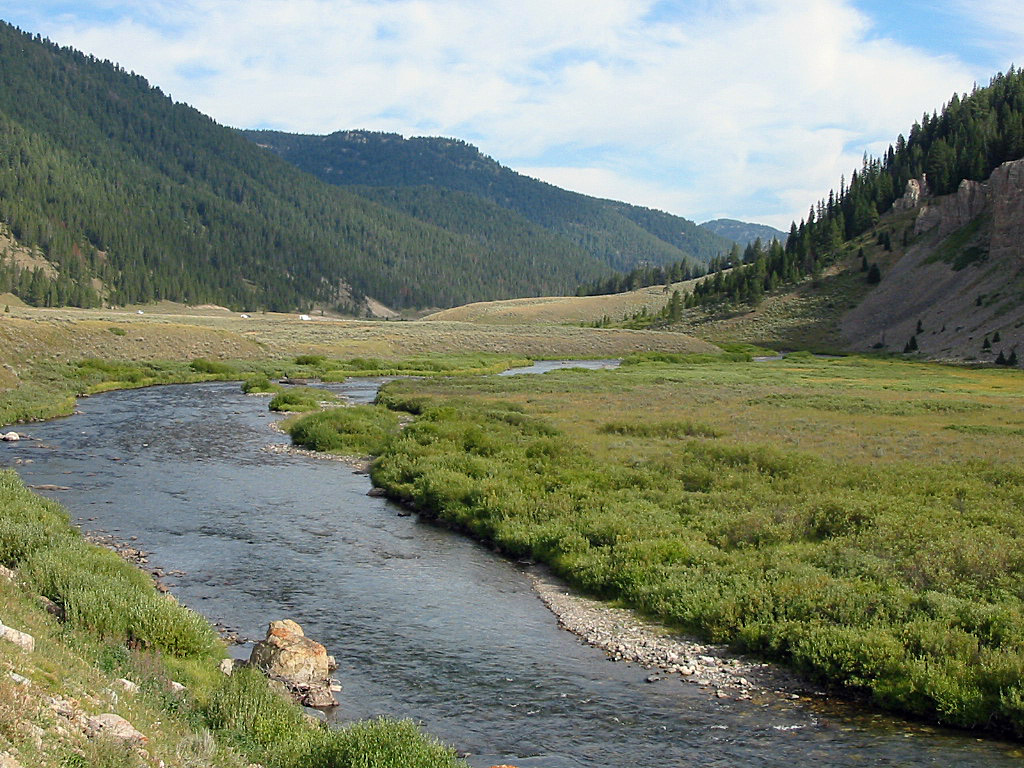

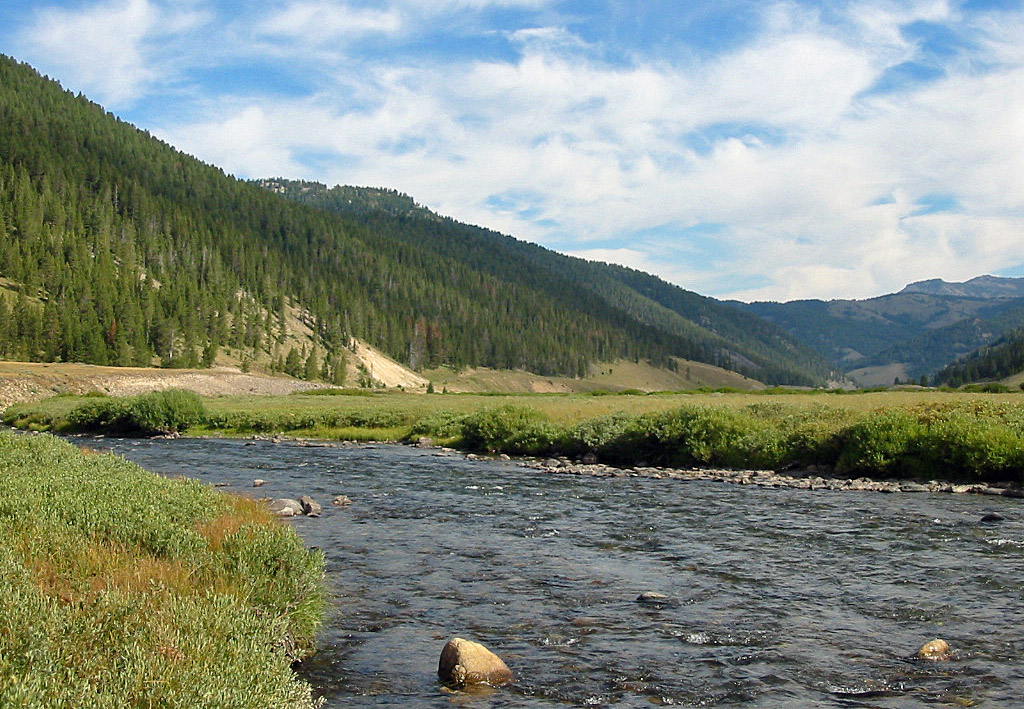
The Gallatin River in Yellowstone National Park is a beautiful river which offers the bonus of easy accessibility. The Gallatin River begins high in the mountains at Gallatin Lake. From there, the river tumbles down through the mountains before spilling into a broad and scenic valley located in the far Northwest section of the park. The river then runs for 11 miles through this beautiful valley before it leaves Yellowstone National Park and enters Montana, upstream from the town of Big Sky. The valley section of the Gallatin River is the most popular for fishing and also has the most productive fishing.
Access to the lower section of the Gallatin River is excellent. Highway 191 starts to follow the Gallatin River soon after it emerges from the mountains—and then continues to follow the Highway well beyond the park boundaries into Montana. As such, fishing access is superb. Just pull off the road, using one of the many pullouts available, and take the short hike over to the river. Since the valley consists of small brush and grass, hiking along the river is simple, although some marshy areas can make things wet and a bit buggy at times.
The Gallatin River is quite small while in Yellowstone National Park. At times, it seems a frog could jump across it. The Gallatin twists and turns extensively, and has numerous undercut banks and some appealing holes. Since the water is quite clear and the river so shallow and narrow, a careful presentation and a cautious approach are all needed to avoid spooking the fish.
Read the web’s best guide on how to select a fly rod to meet your own specific fishing needs.
Fishing pressure on the Gallatin River is moderate. While it is a popular river for fishing, particularly among the locals, the easy access for much of its length spreads anglers around. Solitude, as well as the best fishing conditions, will best be found by locating where the river is located furthest from the road and taking the easy hike over to it.
The Gallatin River in the valley section has excellent fly fishing for both rainbow and brown trout. Average rainbow size is 12 inches. Brown trout average between 12-14 inches, although some lunkers exceeding twenty inches do inhabit the river.
The trout in the Gallatin River is found in all types of water. The brown trout hang around holes and undercut banks. That said, pay careful attention to all the water. It is not unusual to find large trout in places few think would hold fish, such as in the very shallow riffles that are found on the Gallatin.
Not surprisingly, since the Gallatin River runs through a vast meadow, terrestrial fishing is excellent using hopper imitations, sized 4-10, beginning in July and lasting through September. The dry fly fisherman can also have success beginning in July using Elk Hair Caddis, Pale Morning Duns, the Green Drake, and the X-Caddis, in sizes 14-18. Streamers can also be gingerly used around the undercut banks and in the holes. Attractor patterns such as the Royal Wulff also can work exceptionally well during the summer, and are an excellent alternative to using terrestrials.
Note, the Gallatin River continues beyond Yellowstone Park. To learn more about the river outside of Yellowstone, read the Gallatin River in Montana section.
More Photographs of the Gallatin River in Yellowstone National Park