

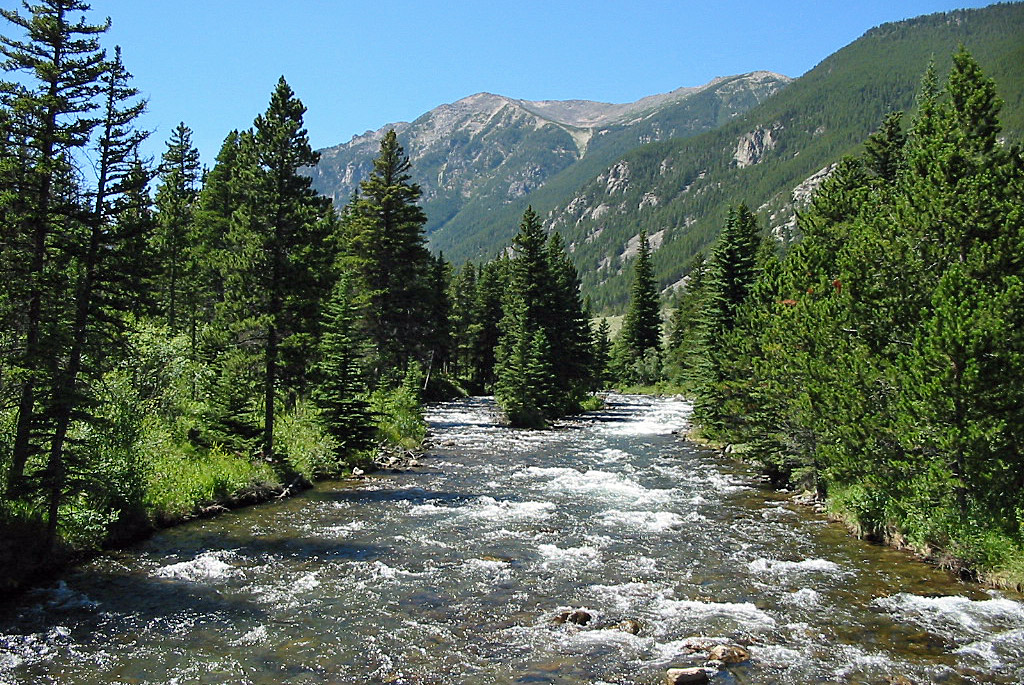
Rosebud Creek is located in the beautiful high prairie just to the north of the Absaroka-Beartooth Wilderness Area. Rosebud Creek only flows for four miles, from the confluence of the East and West Forks Rosebud Creek to the Stillwater River. Thus, the two forks of Rosebud Creek provide for the bulk of the fishing. For simplicity, Rosebud Creek and its two forks are covered together in this section, as the two forks are quite similar.
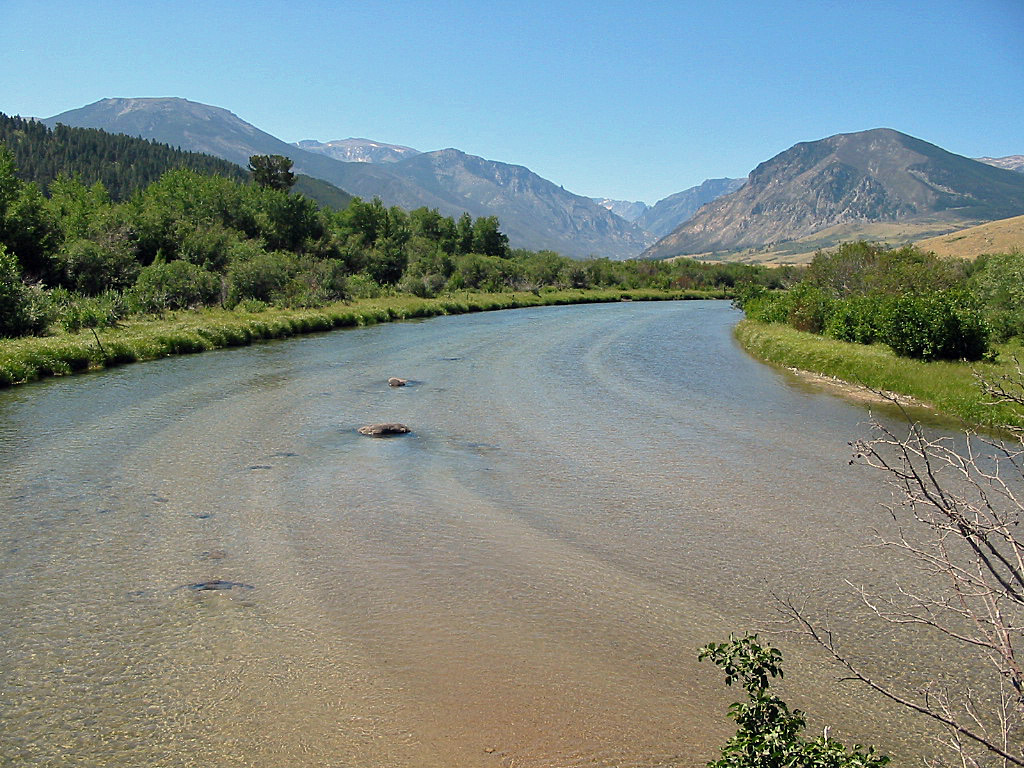
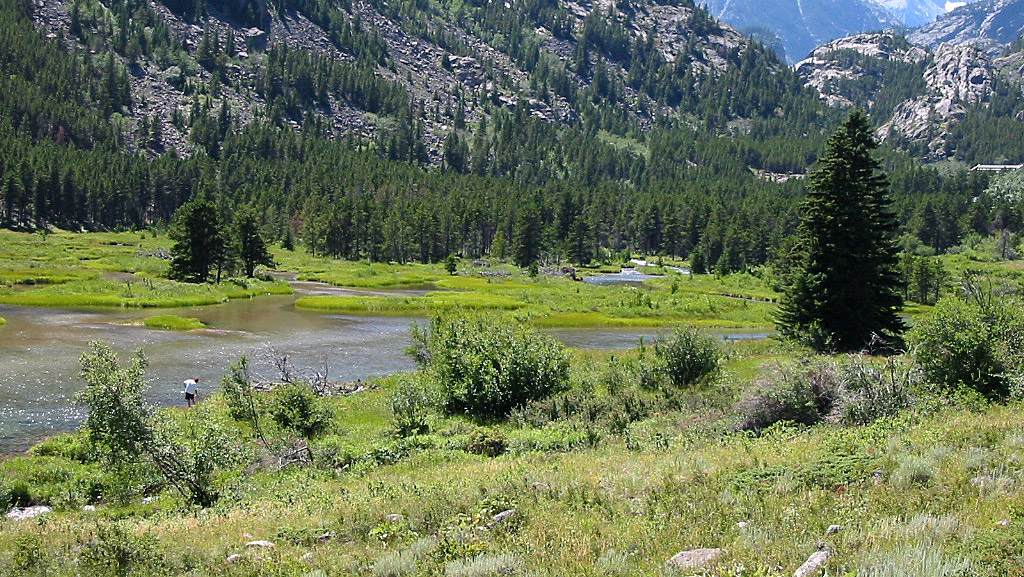
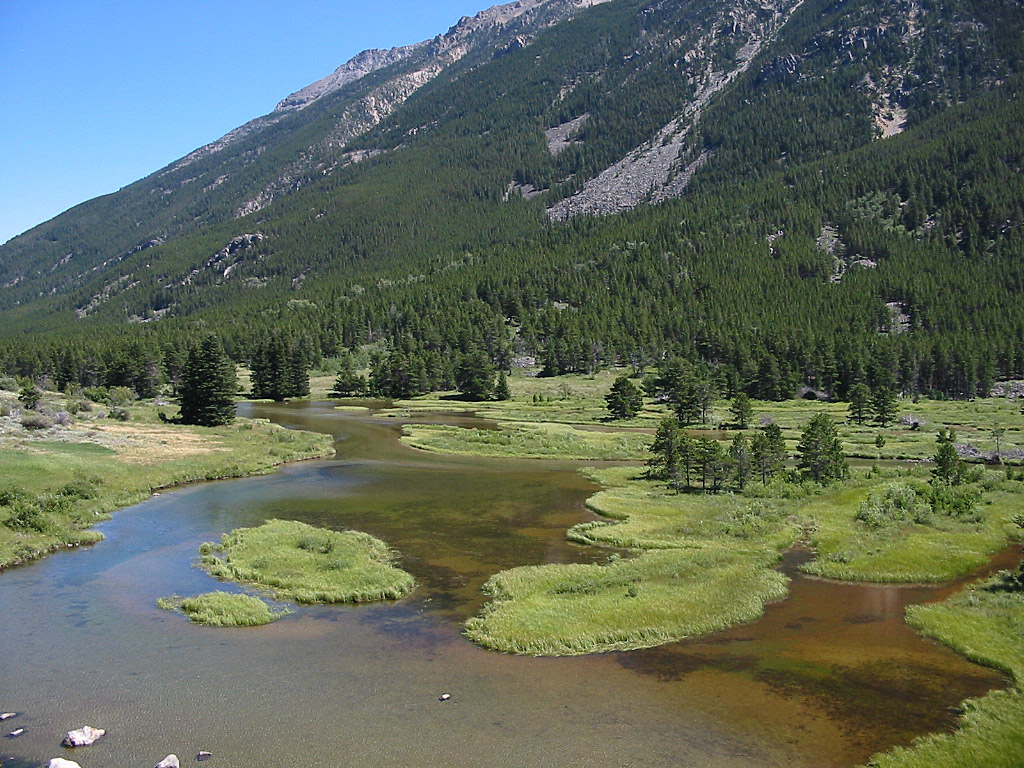
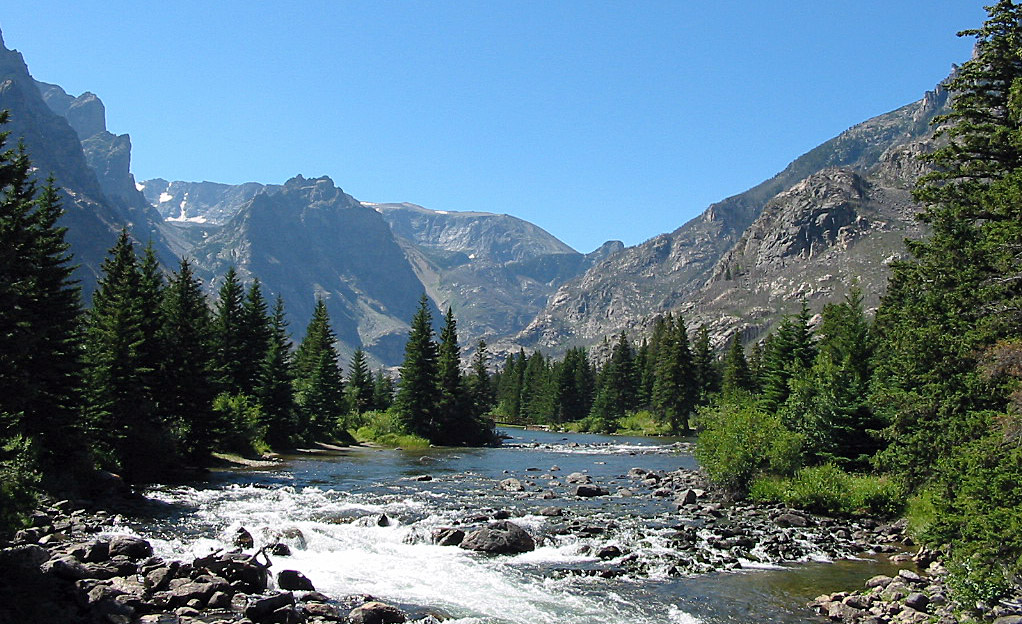
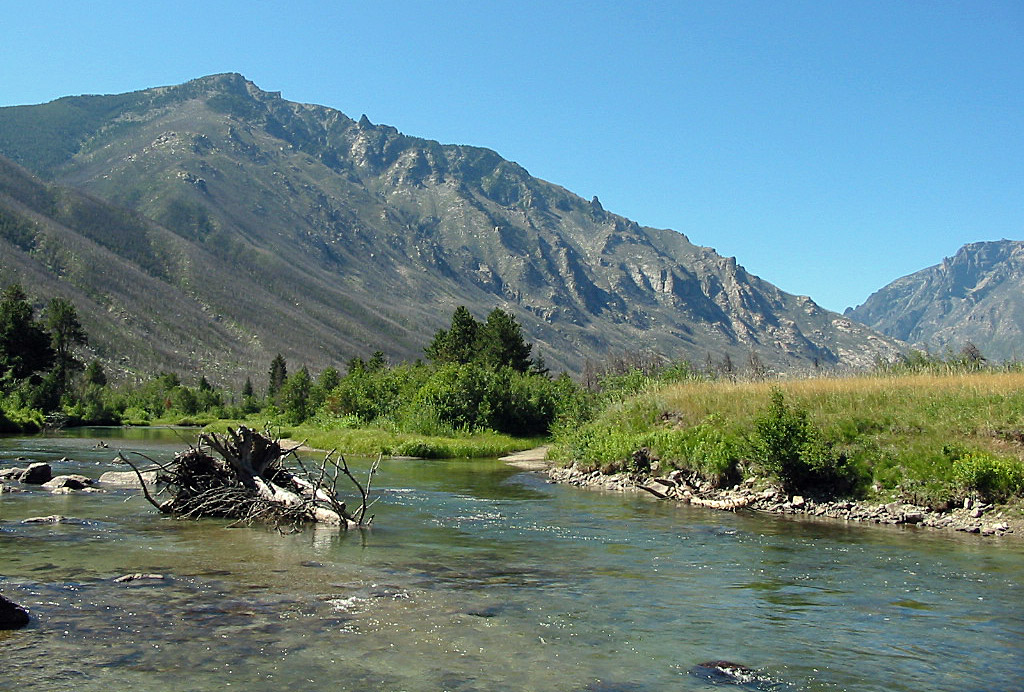
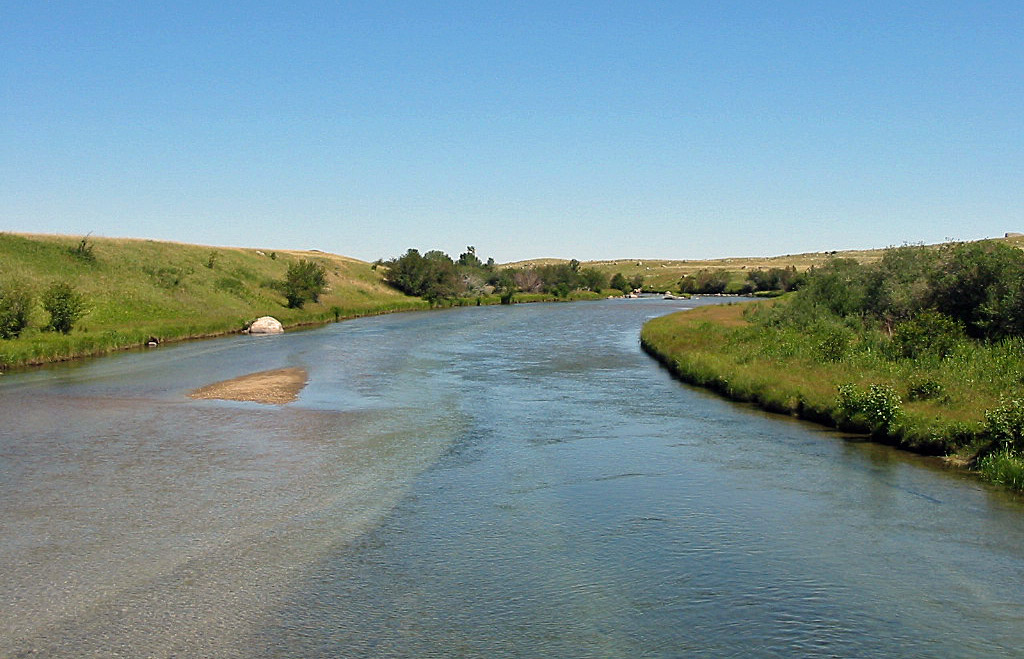
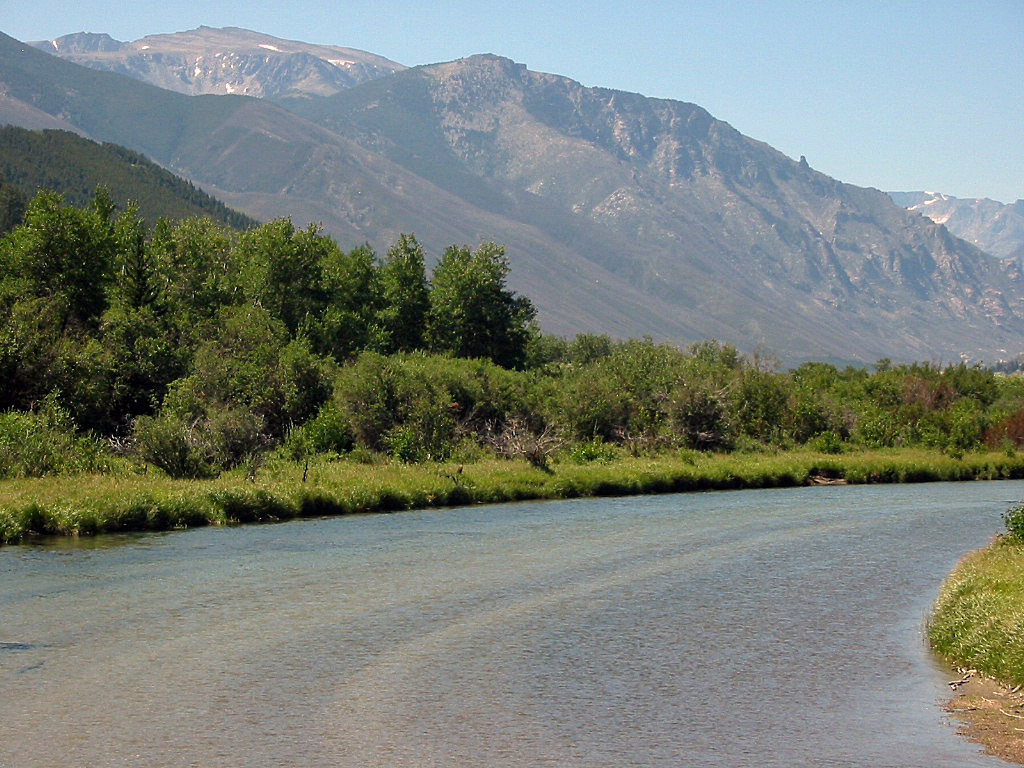
For an angler looking for a pretty place to fish, the forks of Rosebud Creek are hard to beat. Both begin in the Absaroka-Beartooth Wilderness Area and flow through beautiful mountainous terrain. The forks then flow out into the rolling prairie, with the towering mountains providing a stunning backdrop to any fishing trip here. The waters are also crystal clear along both forks. The forks have a mix of trees, brush and meadows along their banks for their entire length.
Although both West Fork Rosebud Creek and East Fork Rosebud Creek are classified as “creeks”, they both carry lots of water and are larger than some “rivers” in Montana. East Rosebud Creek in particular is quite large for being a “little creek.”
Access to West Fork Rosebud Creek is somewhat difficult. Except in its upper stretches, the West Fork flows through predominantly private property, even in the mountainous terrain. Once the West Fork reaches the prairie, access is limited to a handful of bridge crossings.
East Fork Rosebud Creek has much better access. For almost its entire length in the mountains, the East Fork flows through Forest Service Lands and has excellent access all the way to roads end (the creek is closely paralleled by a forest road for its entire length in the mountains). Once the river leaves the mountains, a handful of bridge crossings allow provide limited access sites.
The main stem of Rosebud Creek, all four miles of it, itself has poor access. Access to the main-stem is limited to a few bridge crossings.
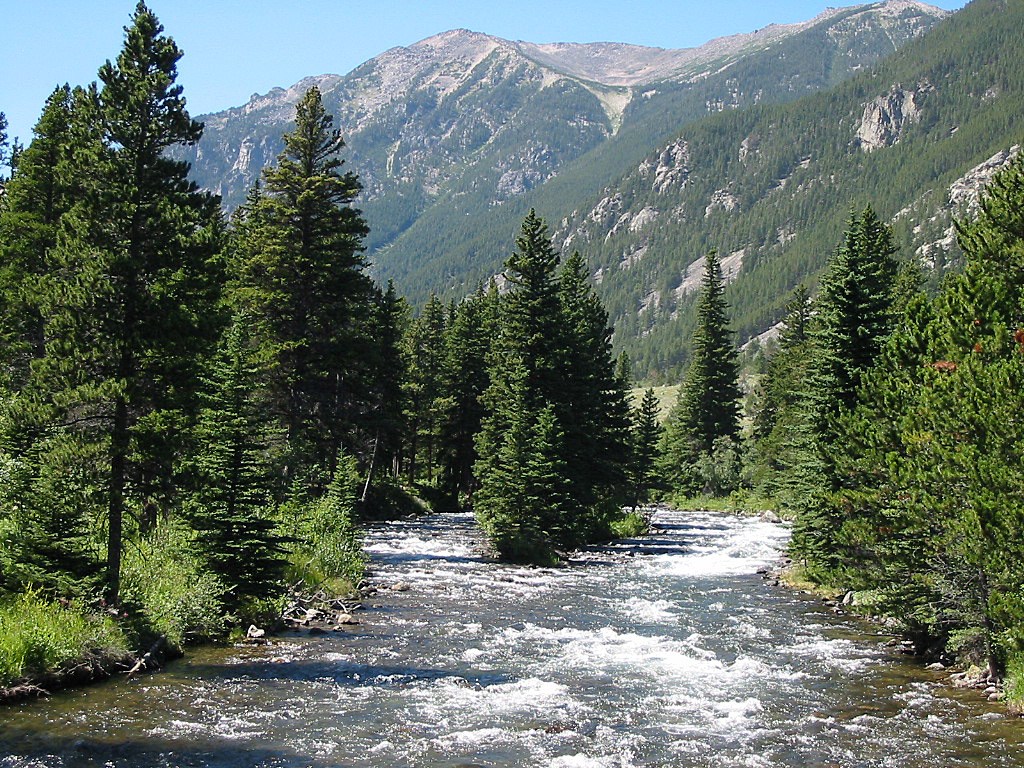
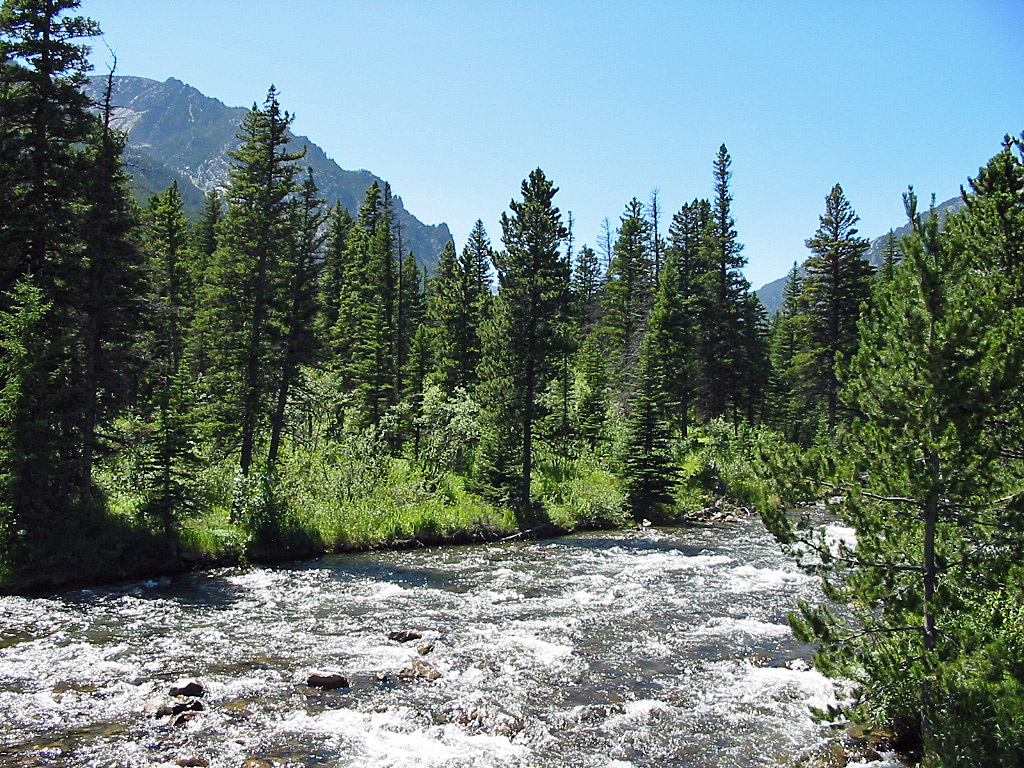
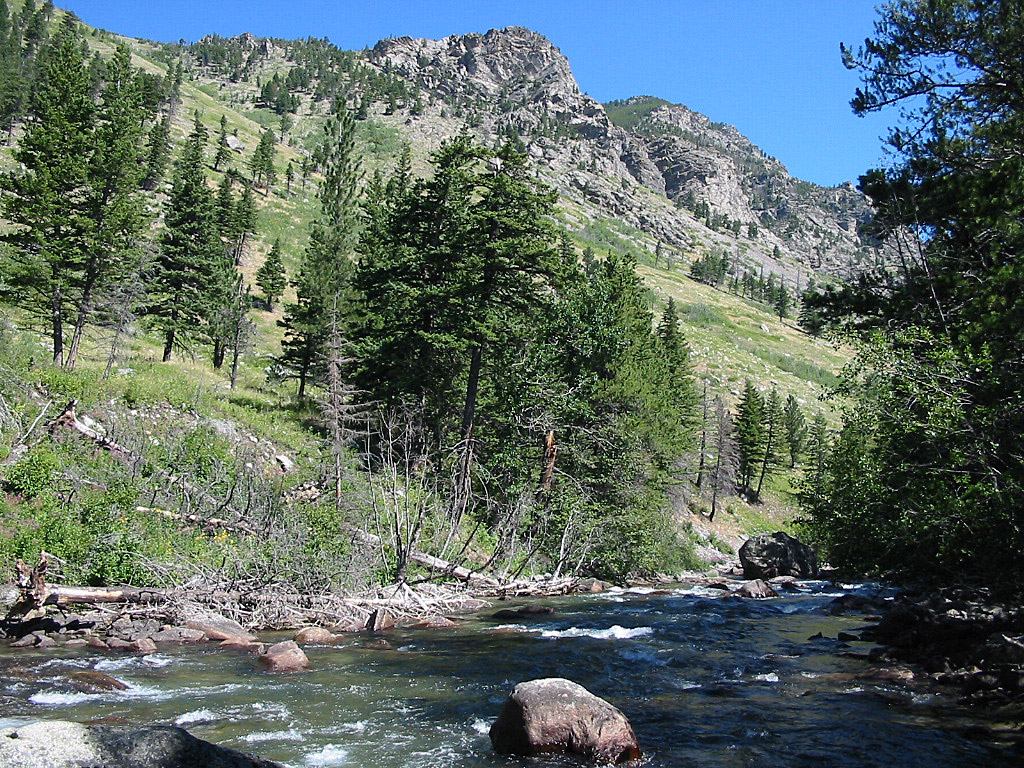
 The fishing in the two forks of Rosebud Creek can provide fast and furious action for small cutthroat trout, brook trout and rainbow trout in its upper, mountainous sections. In the mountains each of the forks come tumbling down from the mountains, with extensive rapids and pocket water. Fishing pressure is quite light as most people visiting are here for purposes other than fishing (each of the forks are a popular trailhead and camping location). These small fish will rise readily to a fairly well presented dry fly that is cast their way. Average sizes range between 8-12 inches, so don’t expect to take home a lunker.
The middle sections of these creeks, particularly on the East Fork, can provide excellent fishing for decent sized brown trout and rainbow trout. For clarification, the middle section of the East Fork Rosebud Creek is defined as the lower mountain stretch of the river (the last 5 miles the river is located in National Forest Lands). Numerous holes, lots of downfalls and extensive meadows (helped by a large burn years ago) provide lots of nice habitat. Hopper imitations work excellent later in the summer. Streamers are also effective, weighted down and fished around the downfall, in the holes and by the undercut banks. Lots of large rocks in the river also provide lots of pocket water fishing with standard dry flies, such as the Parachute Adams and the Elk Hair Caddis. Fishing pressure is quite light. Lighter tackle and tippets provide the best chance of success. Average trout in this section is around 12 inches.
The two forks of Rosebud Creek then spill out onto the rolling prairie. Both offer good brown trout and rainbow trout fishing. The trick is getting to them as both these forks flow through private property with virtually no spots for access.
Since both of these forks are floatable in normal water conditions in the prairie section, float fishing is recommended as the preferred method on the lower sections of both forks and the main-stem itself. Just watch out for the occasional fence and irrigation equipment. Wade fishermen who have the patience can also wade up or downstream from one of the bridge crossings to reach good-looking fishing spots. Streamers, hopper imitations and standard dry flies all work well on the prairie sections of the forks of Rosebud Creek.
Rosebud Creek itself has very good brown trout fishing, similar to that found in the lower sections of its forks. The best way to fish it, assuming water levels are normal, is to float it, although it will be a short four-mile float, with the take out point located just to the west of the small town of Absarokee. If you miss this takeout point, the next stop is a fishing access site well down the Stillwater River.
Floating & Paddling Rosebud Creek
Should you plan on floating either of the two forks, a small inflatable raft or inflatable kayak is the recommended vessel. East Rosebud Creek and West Rosebud Creek both are fairly narrow and a large raft will likely take up most of the river. The creeks also have some downfall in them and are very twisty. A small, maneuverable raft or kayak is much more manageable than a large one and can be carried over downfall encountered. A canoe, if water levels are high enough, can also work.
The best floating on either of the two forks is found in the prairie section, just after the creeks leave the mountains. The mountain sections of both creeks are very narrow, and consist of constant whitewater and rocks. Low water depth will also likely pose problems to anyone attempting to float the mountain sections of either of the two forks.
Photographs of Rosebud Creek in Montana
Related Articles on Big Sky Fishing.Com
- Fishing the Stillwater River in Montana
- Absarokee Loop Scenic Drive
- Absarokee, Montana – Town Info & Photos