

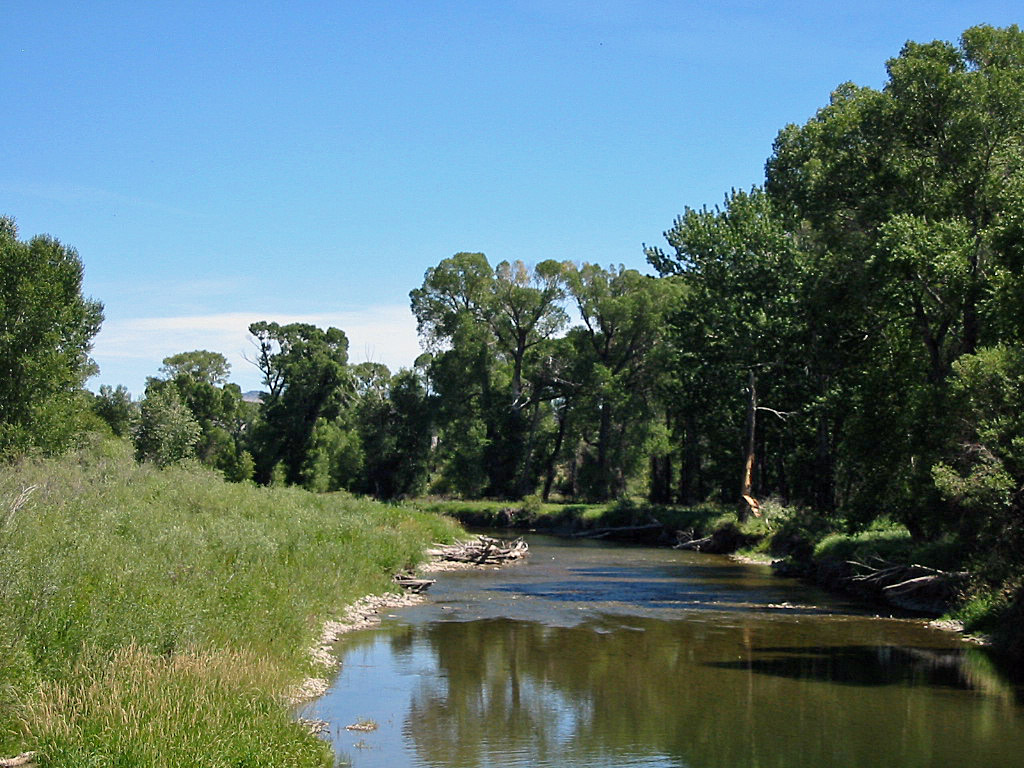
The Shields River in Montana begins in the Crazy Mountains and flows for 62 miles to the confluence with the Yellowstone River just east of Livingston. Once the river leaves the mountains, it flows through a very broad and somewhat arid valley. The countryside the Shields River flows through is quite scenic, with the towering Crazy Mountains to the east and the equally tall Bridger Range to the west.
For all of its length, the Shields River is generally very narrow, twists and turns extensively, has lots of downfall in the river and can be very shallow later in the summer. The banks of the river are frequently choked in thick brush, making walking and casting a challenge. Irrigation use on the river is also heavy and pulls a lot of the water out of the river during the summer, although the lower water levels do make access easier.
Access to the Shields River is not the best. It flows through private property for almost its entire length, even in its upper mountainous section. As a result, access to the river can only be had at the various bridge crossings and one dedicated fishing access site. Thankfully, highway and country road bridges cross the river quite frequently, allowing for decent if not great access.
Fishing pressure on the Shields River is extremely low. Since the river is so close to many other better-known rivers, such as the Yellowstone River, the Boulder River and the Missouri River, few anglers ever bother to go out of their way to fly fish this small river.
The upper section of the Shields River is home mainly to Yellowstone cutthroat trout and brook trout, which are small but quite numerous. Downstream from the town of Wilsall, the Shields River becomes brown trout water, with some smaller rainbows also being found. While fish populations are not exceptionally high, the combination of light fishing pressure, excellent habitat in some areas, and nutrient heavy water allows the trout to become quite large.
Fishing the Shields River
Fly fishing the Shields River requires some patience, effort and good casting technique. Large brown trout can be found on the Shields River downstream from Wilsall. However, fish populations are scattered. Some sections of the river may be devoid entirely of fish due to lack of cover, low water, man-made ditches and riverbank erosion. Thus, when fishing the Shields River, a person will need to walk up or down the river away from the various bridge crossings, looking for the best habitat that will hold these larger brown trout.
As always with brown trout, their preferred habitat is in holes, undercut banks and around the thickest cover that can be found, such as downfalls. The Shields River has all of these in abundance, particularly the downfall. Streamers are the flies of choice when fly fishing the Shields. Fish the streamers right around the prime habitat, using either weights or a sink tip line to take them down to depth. Since the lower half of the river is not as clear as many other Montana rivers of similar size, due to erosion and siltation, darker color streamers patterns generally work best.
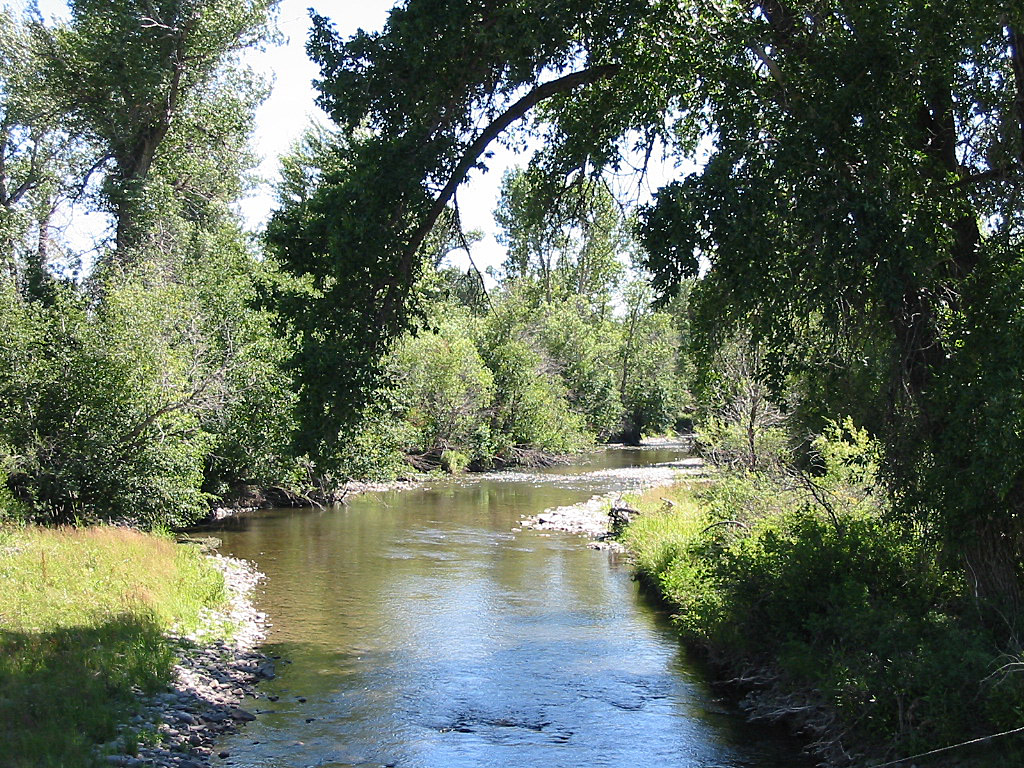 Fall presents the best time to fish the Shields River. During the fall, many very large brown trout begin to migrate up from the Yellowstone River to spawn. This gives an angler who is using a streamer and can make the necessary and accurate casts an excellent chance to land a very large brown trout on a very small river. The best fishing during the fall for these large brown trout will be found downstream from Clydes Park.
The Shields River is a river for wade fishing. Most of the river is unfloatable, even during high water, due to extensive downfalls, fences, and irrigation jettys. The only section of the river that is suitable to floating is downstream from Clydes Park (the lower 20 miles of the river).
However, this section of the river is generally very narrow and twists and turns extensively, making float fishing very difficult. For the recreational floater, this section of the Shields River can be floated during normal flows, but by late summer floating on this section will often be impossible due to low water.
Overall, the Shields River has the potential to be a good fishery, but a combination of land use practices and heavy irrigation use all take its toll on the river.
And the lack of fishing access sites on the river makes it difficult for anglers to access an otherwise potentially fine river.
Stillwater River : River Miles
- Origin: 61
- Shields River Campground: 57
- Road Bridge: 52
- Shields River Road Bridge: 49
- Anderson Road Bridge: 45
- Coal Camp Road Bridge: 42
- Shields River Road Bridge: 37
- Elk Creek Road Bridge: 35
- Daisy Dean Road Bridge: 34
- Horse Creek Road Bridge (Wilsall): 32
- Road Bridge: 29
- Highway 89 Road Bridge: 23
- Brackett Creek Road Bridge: 20
- Highway 89 Road Bridge: 14
- Bangtail Creek Road Bridge: 10
- Crazyhead Creek Road Bridge: 4
- Old Stage Road Bridge: .5
- Confluence with Yellowstone River: 0
Related Articles
- Shields River Photographs
- Livingston, Montana – Town info and photos
- Crazy Mountains Backcountry Drive
- Harlowton, Montana – Town info and photos
- Fly Fishing the Yellowstone River